Water Repellent for Leather: Protecting Footwear, Bags and Upholstery
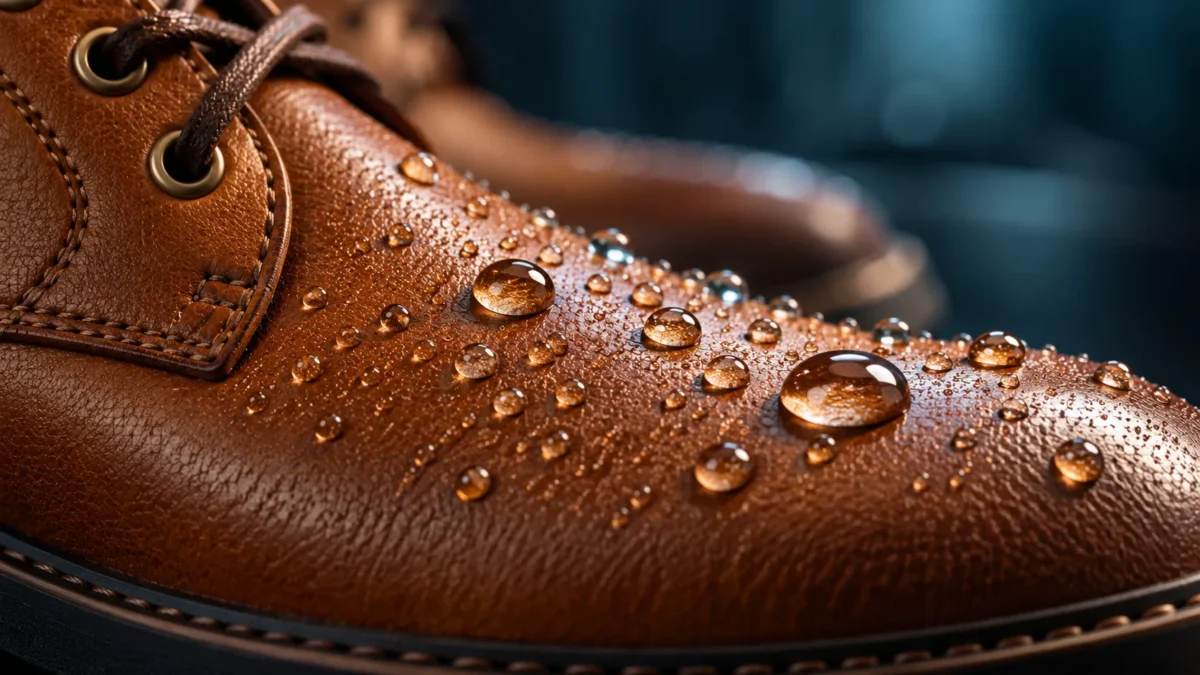
A water repellent for leather works differently from a textile finish, because leather is a porous natural material rather than a woven fabric. It is treated by spraying or impregnation rather than on a stenter, and the finish has to protect the leather without sealing it. This guide covers how a water repellent for leather works, which chemistry to use, and how to keep the leather breathable.
For chemistry background, see C6 vs C0 water repellents; for how sprays work, see spray-on water repellents.
How a water repellent for leather works
Rather than pad-dry-cure, leather is protected by a spray applied to the surface, or by impregnation in a drum during tanning or finishing. The repellent penetrates the pores and coats the fibres so water beads off, then air-dries — no oven required. Even coverage is the key to an even result.
C0 or C6 for leather?
Footwear and bags usually want to shed both water and oil, which points to a C6. Where only water repellency is needed, or a PFAS-free product is wanted, a fluorine-free C0 does the job. See C6 vs C0 to decide.
Keeping leather breathable and natural
Good leather breathes, and a heavy coating that seals it will make it stiff and clammy. A well-chosen repellent lets moisture vapour pass while keeping liquid water out, and preserves the leather’s look and feel rather than darkening or glossing it. Always test on a hidden area first.
Where leather water repellents are used
- Footwear: the biggest use — protecting shoes and boots from water and stains.
- Bags, gloves and accessories.
- Furniture and automotive leather — see upholstery and automotive.
Consumer protector sprays for leather
Many brands sell a branded leather protector spray so customers can maintain the finish at home. These are air-dry consumer sprays — see our private label spray guide if you want to launch one.
Get a leather grade
DWR Factory supplies water repellents for leather as sprays and impregnation grades, C0 and C6, with OEKO-TEX-compliant options and a TDS per grade. Tell us your product and we will recommend one: request a free sample or browse the range.
Frequently asked questions
How do you make leather water repellent?
By spraying a repellent onto the surface or impregnating it during finishing; it penetrates the pores, then air-dries, with no heat cure.
Is C0 or C6 better for leather?
C6 repels water and oil, which suits footwear and bags; C0 repels water only and is PFAS-free. Choose by whether oil resistance is needed.
Does a water repellent make leather stiff or dark?
A good grade should not — it should keep leather breathable and natural. Always test a hidden area first.
Can you spray leather shoes to make them water repellent?
Yes. A leather protector spray applied evenly and left to air-dry gives good water repellency; re-apply periodically.
Does leather need to stay breathable?
Yes. A finish that seals leather makes it stiff and clammy; the repellent should keep water out while letting moisture vapour pass.
Explore our water repellents
Need help choosing a water repellent?
Tell us your substrate, process and target. Our technical team will recommend a grade, send the datasheet, and arrange a free sample.