Water Repellent for Apparel: Softness, Breathability & Wash Durability
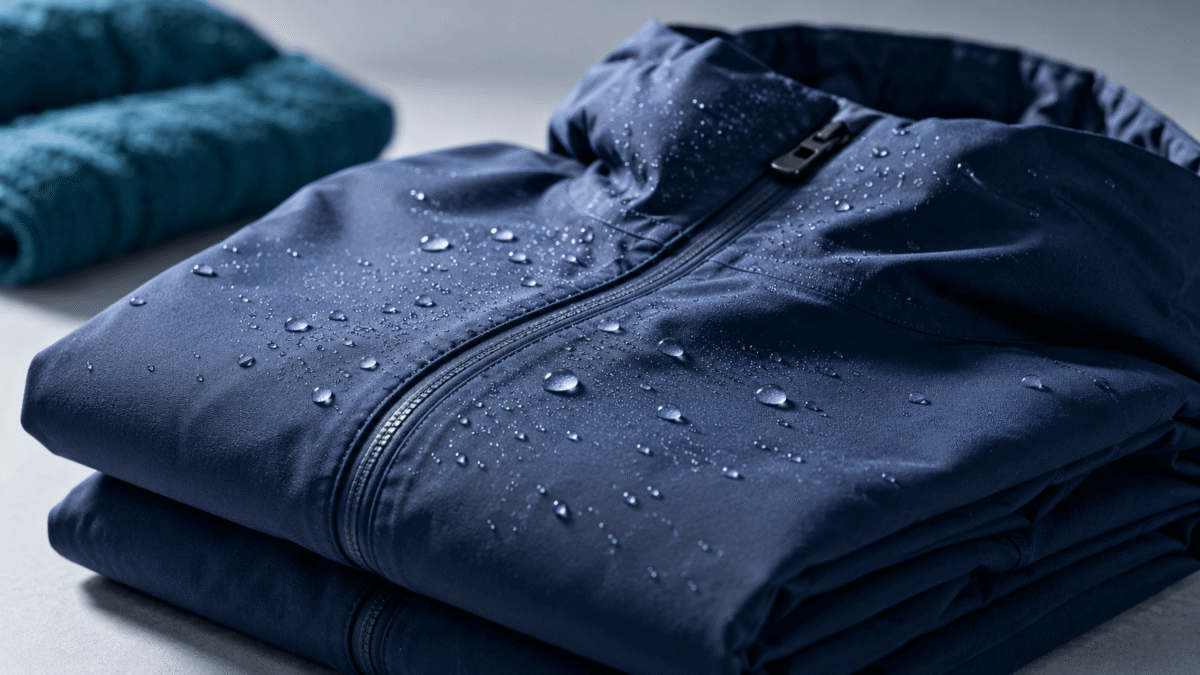
A water repellent for apparel has to do more than shed rain: it must keep the fabric soft, breathable and comfortable, and survive repeated washing. For most clothing that means a fluorine-free (C0) finish, applied with a crosslinker and cure so the repellency lasts. This guide covers what to look for in a water repellent for apparel, by fabric and by end use.
For the fundamentals, see our durable water repellent overview; to compare the chemistries, see C6 vs C0 water repellents.
What a water repellent for apparel needs to deliver
- Soft hand: clothing has to feel good against the skin — the finish can’t stiffen the fabric.
- Breathability: a good apparel finish repels water without sealing the fabric, so it still breathes.
- Wash durability: garments are laundered often, so the repellency has to survive many wash cycles.
- PFAS-free & safe: for skin contact, and especially kidswear, a fluorine-free finish is the safe, compliant choice.
Why fluorine-free (C0) is the default for clothing
Apparel rarely needs oil repellency, so the main reason to use a fluorocarbon disappears — while the reasons to avoid PFAS (skin contact, kidswear safety, spreading PFAS bans) all point to a PFAS-free (C0) water repellent. Modern C0 matches fluorocarbons on spray rating and hand-feel for water repellency, so for clothing it’s usually the right call. The exception is workwear that must also shed oil and grease, where a C6 may still be needed — see C6 vs C0.
By fabric: nylon, polyester, cotton and blends
- Nylon & polyester: take a water-repellent finish well and hold a high spray rating; the mainstay of sportswear and outerwear.
- Cotton & cotton blends: can be made water repellent, but absorb more, so grade selection and pick-up matter more.
- Spandex / elastane blends: need a low-temperature cure so the stretch fibre isn’t damaged — specify this up front.
Keeping softness and breathability
The most common complaint about a treated garment is a stiff or “coated” feel — and it’s almost always over-application, not the chemistry. The right grade at the right pick-up leaves the hand soft and the fabric breathable; a silicone-modified C0 in particular gives a very soft finish. Ask your supplier for a grade tuned for hand-feel on your fabric.
Wash durability for garments
Because clothing is washed often, durability is decided by the crosslinker and cure, not the repellent alone. With both, a C0 apparel finish holds a useful water rating for 20+ home washes, and a warm tumble-dry helps it recover between washes. See wash-durable water repellency and how to apply durable water repellent for the detail.
Performance and sun-protection apparel
For sportswear and sun-protection layers, a water repellent for apparel pairs naturally with a soft, breathable, quick-drying build — beading off sweat and light rain while staying comfortable next to the skin. A fluorine-free finish keeps the garment safe for close skin contact.
Consumer refresh sprays
Brands often add a matching consumer aftercare spray so customers can refresh the water repellency at home after many washes. These are air-dry, no-heat formulations sold alongside the garment. Tell us whether you want a garment finish, a consumer spray, or both.
Get a water repellent for apparel sample
DWR Factory supplies soft-hand, PFAS-free C0 water repellents for apparel — nylon, polyester, cotton and stretch blends — plus matching consumer sprays, all OEKO-TEX-compliant with a TDS per grade. Tell us your fabric and target spray rating and we’ll recommend a grade: request a free sample or browse the range.
Frequently asked questions
What is the best water repellent for apparel?
For most clothing, a fluorine-free (C0) finish — soft, breathable, PFAS-free and wash-durable. Only workwear that also needs to shed oil calls for a C6.
Is water repellent on clothes safe?
Yes. A fluorine-free (C0) finish is PFAS-free and safe for skin contact and kidswear. For those uses, avoid PFAS-based (fluorocarbon) finishes.
Does a water repellent make fabric stiff or unbreathable?
No, when applied correctly. Stiffness comes from over-application; the right grade and pick-up keep the hand soft and the fabric breathable.
How many washes does it last on clothing?
With a crosslinker and a proper cure, a C0 apparel finish holds up for 20+ home washes, and a warm tumble-dry helps it recover.
Can you make cotton water repellent?
Yes. Cotton and cotton blends can be finished, though they absorb more, so grade and pick-up selection matter more than on synthetics.
Does an apparel water repellent repel oil?
A fluorine-free (C0) finish repels water only. Oil repellency needs a C6 fluorocarbon, which apparel rarely requires.
Explore our water repellents
Need help choosing a water repellent?
Tell us your substrate, process and target. Our technical team will recommend a grade, send the datasheet, and arrange a free sample.