Water Repellent for Medical Textiles: Gowns, Drapes and Healthcare Fabrics
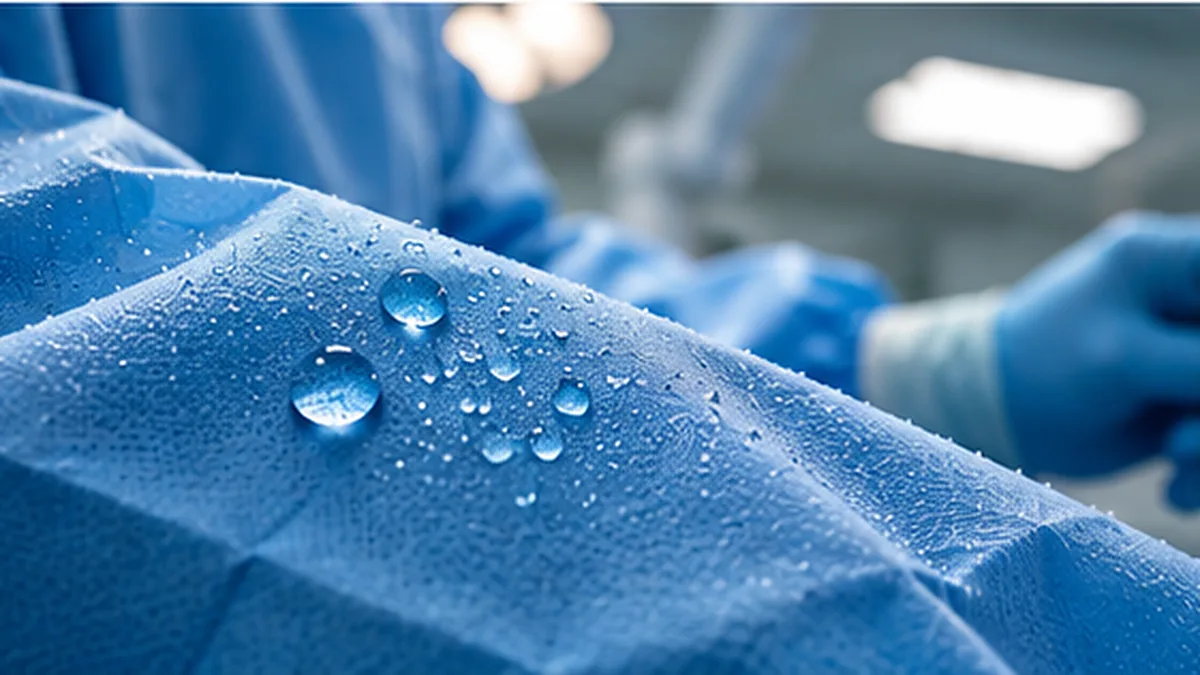
A water repellent for medical textiles does a serious job: it creates a fluid barrier. In surgical gowns, drapes and other healthcare fabrics, repelling blood and fluids is part of infection control, so these finishes are specified to defined barrier levels and tested accordingly. This guide covers where repellency is used in medical textiles and how it is specified.
For the underlying testing, see water repellent certifications and water repellency ratings.
Why repellency matters in healthcare
In a clinical setting, a fabric that repels fluids helps stop the transfer of blood and other liquids, protecting staff and patients. The repellent finish is one part of a garment or drape engineered to a barrier standard — it is not a cosmetic feature.
Reusable vs disposable
Medical textiles come in two families: reusable gowns and drapes, typically woven polyester that must stay repellent through many industrial launderings and sterilisations, and single-use disposables, usually nonwoven materials such as SMS. Each needs a finish suited to its life.
Barrier levels and testing
Surgical gowns and drapes are classified by barrier performance, for example the AAMI levels used in many markets, and validated with standardised tests. Any medical finish has to be qualified against the relevant barrier standard for its intended use, not assumed.
Fluid and alcohol repellency
Some clinical fluids have a low surface tension, so a finish may need to repel more than plain water. That can call for fluorochemistry, though the healthcare sector, like others, is weighing PFAS-free options as they develop. The right chemistry depends on the specific barrier requirement.
Where a water repellent for medical textiles is used
- Surgical gowns and drapes.
- Isolation and protective apparel.
- Other healthcare fabrics needing a fluid barrier.
Get a medical-textile grade
DWR Factory supplies fluid-repellent finishes for medical and healthcare textiles, reusable and disposable, with a TDS and compliance documentation per grade. Tell us your fabric and the barrier level you need: request a free sample or browse the range.
Frequently asked questions
What is a water repellent for medical textiles?
A finish that gives fabrics like surgical gowns and drapes a fluid barrier, repelling blood and liquids as part of infection control, to a defined barrier level.
What is the difference between reusable and disposable medical textiles?
Reusable gowns are usually woven polyester that stays repellent through many launderings; disposables are single-use nonwovens such as SMS.
How is medical repellency measured?
By barrier performance to standards such as the AAMI levels, validated with standardised fluid-barrier tests for the intended use.
Do medical finishes need to repel more than water?
Sometimes — some clinical fluids have a low surface tension, which can call for fluorochemistry, though PFAS-free options are developing.
Are medical textile finishes regulated?
Yes. Medical barrier fabrics must be qualified against the relevant standard for their use, so finishes are specified and tested, not assumed.
Explore our water repellents
Need help choosing a water repellent?
Tell us your substrate, process and target. Our technical team will recommend a grade, send the datasheet, and arrange a free sample.