Water Repellent for Marine Fabrics: Sails, Covers and Upholstery
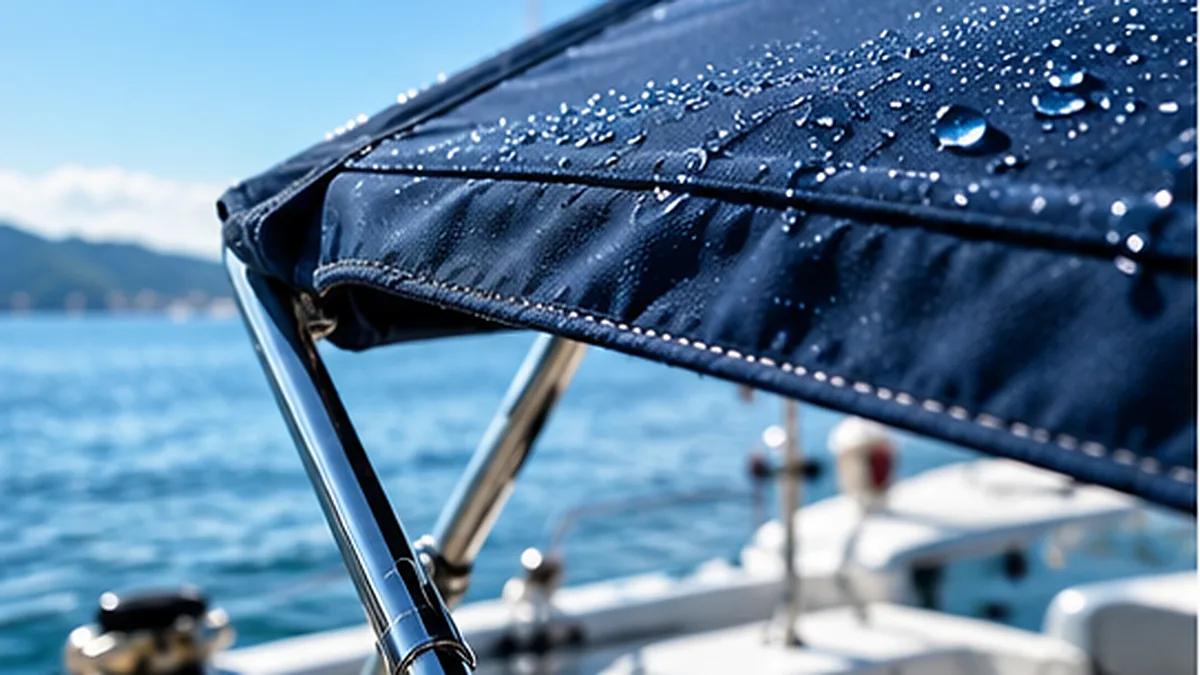
A water repellent for marine fabrics faces the toughest conditions in textiles: relentless sun and UV, salt water, constant damp and mildew. Sails, biminis, covers and boat upholstery all need a finish that lasts years outdoors and often resists mildew too. This guide covers what marine fabrics need and how to specify a water repellent for them.
Much marine fabric is heavy woven cloth — see water repellent for canvas.
What marine fabrics face
Marine textiles live in the harshest outdoor environment: strong UV that degrades finishes, salt water that leaves deposits, and long periods wet, which invites mildew. So durability here means weathering, UV and salt resistance — not wash durability.
The durability that matters
Specify a finish proven to hold its water repellency through prolonged UV and weather exposure, and consider a grade or system that also helps resist mildew, a common marine problem. Re-treatment is expected over a fabric’s life.
Fabrics used at sea
Marine textiles are typically solution-dyed acrylic, polyester or canvas for covers and biminis, and coated fabrics where a full barrier is needed. Each takes a durable repellent, chosen for the fibre and the exposure. See polyester.
Applications
- Biminis, canopies and covers.
- Sails and rigging fabrics.
- Boat and cockpit upholstery — see upholstery.
Choosing a water repellent for marine fabrics
A durable, weather-resistant C0 suits many marine fabrics; where oil and stain resistance on upholstery matters, a C6 is used. See C6 vs C0.
Get a marine grade
DWR Factory supplies durable, UV- and weather-resistant water repellents for marine fabrics, with OEKO-TEX-compliant options and a TDS per grade. Tell us your fabric and application: request a free sample or browse the range.
Frequently asked questions
What is the best water repellent for marine fabrics?
A durable, UV- and weather-resistant grade — often a C0 for covers and sails, and a C6 where boat upholstery needs oil-stain resistance.
What makes marine fabric finishing difficult?
Constant UV, salt water and damp, which degrade finishes and invite mildew, so durability means weathering resistance, not wash resistance.
Do marine finishes resist mildew?
Some grades and systems help resist mildew, a common marine problem, alongside water repellency.
Can boat covers and biminis be re-treated?
Yes. Marine fabrics are expected to be re-treated over their life to restore water repellency after long exposure.
Which fabrics are used for marine covers?
Solution-dyed acrylic, polyester and canvas are common, plus coated fabrics where a full waterproof barrier is needed.
Explore our water repellents
Need help choosing a water repellent?
Tell us your substrate, process and target. Our technical team will recommend a grade, send the datasheet, and arrange a free sample.