How to Apply a Durable Water Repellent: Pad-Dry-Cure, Exhaust & Spray-On
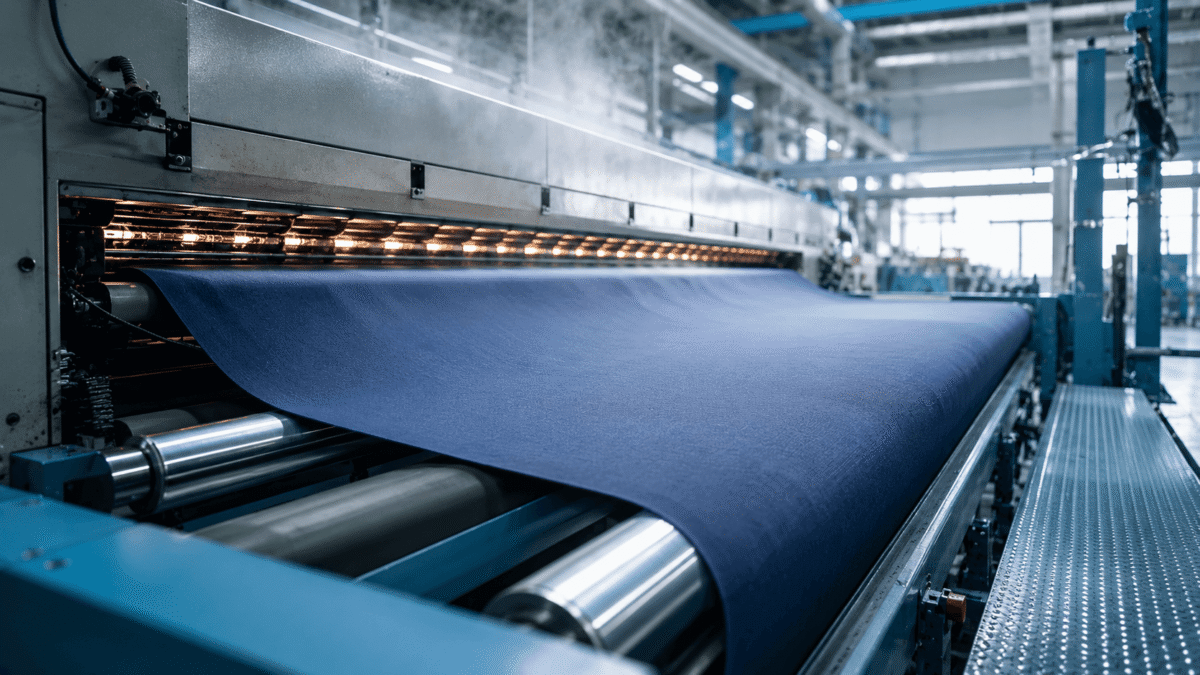
There are three main ways to apply a durable water repellent: pad-dry-cure on a stenter (the industrial standard for mills), exhaust application in a bath, and spray-on / air-dry for finished goods and consumer aftercare. Knowing how to apply durable water repellent correctly matters as much as the chemistry itself — the same product can give an excellent or a useless result depending on dilution, cure temperature and crosslinker. This guide walks through each method, when to use it, and the settings that actually make the finish last.
New here? Start with our overview of durable water repellent finishes and our comparison of C6 vs C0 water repellents.
How to apply a durable water repellent: the three methods
| Method | How it works | Best for | Cure |
|---|---|---|---|
| Pad-dry-cure | Fabric runs through a bath, is squeezed to a set pick-up, dried, then cured on a stenter | Mills, continuous roll goods | 150–170 °C |
| Exhaust | Repellent is exhausted onto the substrate in a jet/winch bath, then dried and cured | Garment dyeing, small batches | 150–170 °C |
| Spray-on / air-dry | Sprayed evenly onto finished goods, then cured or simply air-dried | Finished garments, 3D items, consumer aftercare | Cure or air-dry |
Pad-dry-cure on a stenter (the industry standard)
This is how the vast majority of textiles are finished. The steps:
- Prepare the bath: dilute the repellent to the target concentration, add the crosslinker and, where specified, a catalyst; adjust pH (typically mildly acidic, around 5–6).
- Pad: run the fabric through the bath and squeeze through rollers to a controlled wet pick-up (commonly 50–70%).
- Dry: remove the water at about 100–120 °C.
- Cure: raise to 150–170 °C for the specified dwell time. Curing is what bonds the repellent and crosslinker to the fibre — skip it or under-do it and the finish washes straight out.
Clean, well-scoured fabric with no residual surfactant is essential: leftover wetting agents pull water into the cloth and fight the finish.
Exhaust application
When a stenter isn’t available — for example in garment dyeing — the repellent can be applied by exhaustion in the same kind of bath used for dyeing. It uses chemical less efficiently than padding and needs careful control of bath ratio and temperature, followed by drying and curing. It’s a practical route for batch and garment-level finishing.
Spray-on and air-dry application
Finished garments, footwear, 3D items and consumer products are usually sprayed. In a factory this is done in a spray booth for even coverage, then dried or cured. Consumer aftercare sprays are formulated to air-dry — no oven required — trading some ultimate durability for the convenience of a “spray and wear” product. Even coverage is the key variable: patchy spraying gives patchy repellency.
The settings that decide durability
- Crosslinker: the single biggest factor in wash durability. Without it, even a good repellent washes out quickly.
- Cure temperature & time: under-curing is the most common cause of a finish that fails after a few washes.
- Pick-up / concentration: too little and coverage is incomplete; too much wastes chemical and stiffens the hand.
- pH & catalyst: follow the grade’s TDS — the crosslinker chemistry is pH-sensitive.
- Substrate prep: clean, surfactant-free fabric.
Common mistakes
- Skipping the crosslinker to save a step — then blaming the repellent for poor durability.
- Under-curing (too low a temperature, or too short a dwell time).
- Applying over fabric that still holds scouring surfactant or softener.
- Testing repellency with a spray test such as AATCC 22 before the finish has fully cured and conditioned.
How to choose the method for your line
If you run continuous roll goods through a stenter, use pad-dry-cure. If you finish at the garment stage, use exhaust or spray. If you’re making a consumer product, use an air-dry spray grade. Match the grade to the method — a heat-cure textile grade and a spray-on air-dry grade are different products.
Get the right grade and a process sheet
DWR Factory supplies grades for every method — pad-dry-cure textile finishes (C0 and C6), exhaust-compatible grades, and spray-on / air-dry grades for consumer aftercare — each with a TDS specifying dilution, crosslinker, pH and cure. Tell us your substrate and equipment and we’ll recommend a grade and application settings: request a free sample or browse the range. Deciding on chemistry first? See C6 vs C0 and our PFAS-free guide.
Frequently asked questions
What temperature do you cure a durable water repellent at?
Typically 150–170 °C on a stenter, after drying. Curing bonds the finish and crosslinker to the fibre so it survives washing.
Do you need a crosslinker to apply a durable water repellent?
For wash durability, yes. Without a crosslinker the finish washes out after only a few launderings.
Can you apply a durable water repellent without heat?
Spray-on, air-dry consumer grades need no oven, but they are less durable than a heat-cured factory finish.
What is pad-dry-cure?
The standard industrial method: pad the fabric through a bath, squeeze to a set wet pick-up, dry, then cure at 150–170 °C.
Why isn’t my water repellent durable?
Usually under-curing, a missing crosslinker, or fabric that still holds scouring surfactant or softener.
Can you apply a durable water repellent at home?
Yes, with a consumer air-dry spray — though the result is less durable than a factory heat-cured finish.
Explore our water repellents
Need help choosing a water repellent?
Tell us your substrate, process and target. Our technical team will recommend a grade, send the datasheet, and arrange a free sample.