Water Repellent for Cotton: How to Make Cotton Repel Water
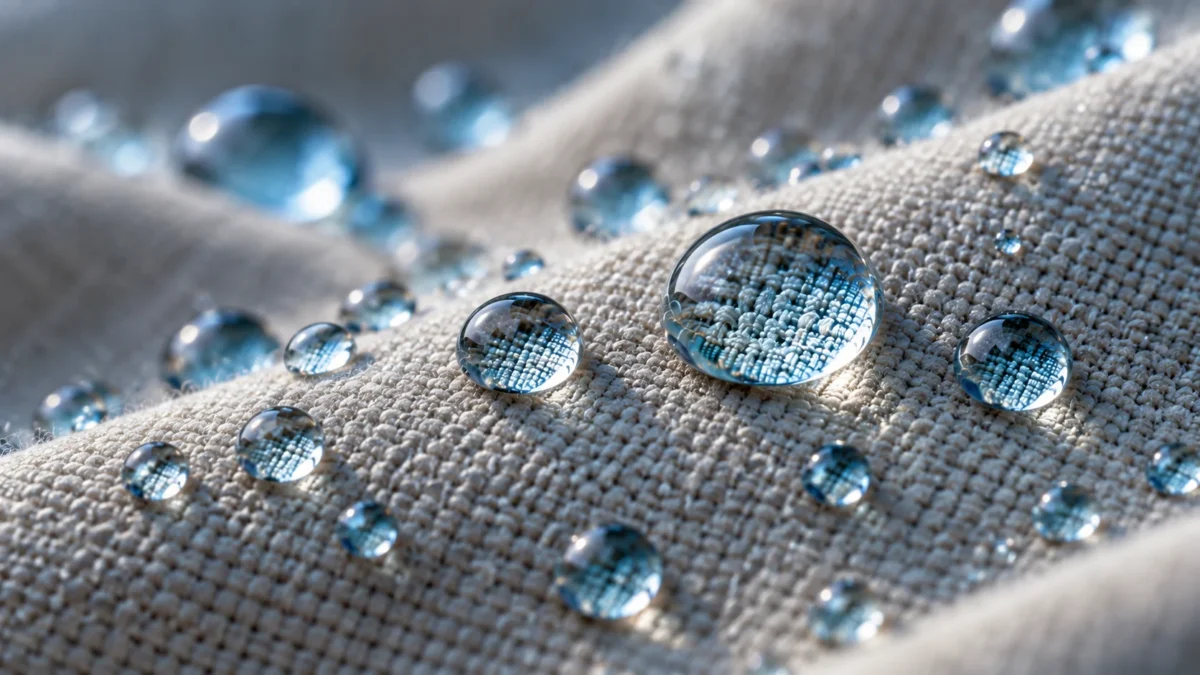
A water repellent for cotton is harder to get right than a finish for synthetics, because cotton loves water: it is a natural, absorbent fibre, so the finish has to overcome that tendency rather than build on it. The keys are the right grade, enough add-on, a crosslinker and a full cure — and keeping the fabric soft. This guide explains how to make cotton repel water durably.
For the fundamentals, see our durable water repellent overview and how to apply a durable water repellent.
Why cotton is harder to make water repellent
Cotton is hydrophilic — its cellulose fibres pull water in — so a repellent has to coat the fibre well and cure firmly to hold water off. Older finishes used paraffin wax, which gave beading but poor wash durability; modern silicone and modified-polymer C0 grades give far better durability with a softer hand.
Choosing a grade for cotton
A fluorine-free C0 grade designed for cellulosics is the usual choice, with a crosslinker to lock it on. Where the product must also shed oil — some workwear — a C6 is used; see C6 vs C0. Because cotton absorbs more, expect a higher add-on than on polyester.
Application and cure for cotton
Cotton is finished by pad-dry-cure. A proper cure is even more important here than on synthetics: it bonds the finish to the cellulose and gives wash durability. Start from clean, scoured cotton with no residual softener or surfactant, which otherwise pulls water back in.
Keeping it soft and breathable
Cotton’s appeal is its hand, so avoid over-application, which stiffens it. A silicone-modified C0 keeps cotton soft while it repels water, and the finish still breathes. Balance add-on against the spray rating you need — see water repellency ratings.
Where cotton water repellents are used
- Apparel: jackets, shirts and cotton-rich blends — see water repellent for apparel.
- Canvas and heavy cotton: tents, awnings, bags and workwear.
- Home textiles and cotton-poly blends.
Get a cotton grade
DWR Factory supplies water repellents for cotton and cotton blends in C0 and C6, with a soft hand and OEKO-TEX-compliant options and a TDS per grade. Tell us your fabric and target and we will recommend one: request a free sample or browse the range.
Frequently asked questions
Can you make cotton water repellent?
Yes. A modern C0 grade with a crosslinker and a full cure makes cotton bead and shed water while staying soft.
Why is cotton harder to make water repellent?
Cotton is a natural, absorbent fibre, so the finish has to overcome its tendency to pull water in, which needs more add-on and a firm cure.
Is a cotton water repellent wash durable?
With a crosslinker and a proper cure, yes — far more durable than old wax finishes.
Does a water repellent make cotton stiff?
Not if applied correctly. A silicone-modified C0 keeps cotton soft; stiffness comes from over-application.
Can canvas be made water repellent?
Yes. Heavy cotton and canvas take a durable finish for tents, awnings and bags.
Explore our water repellents
Need help choosing a water repellent?
Tell us your substrate, process and target. Our technical team will recommend a grade, send the datasheet, and arrange a free sample.