Water Repellent for Wool: Coats, Suiting and Knitwear
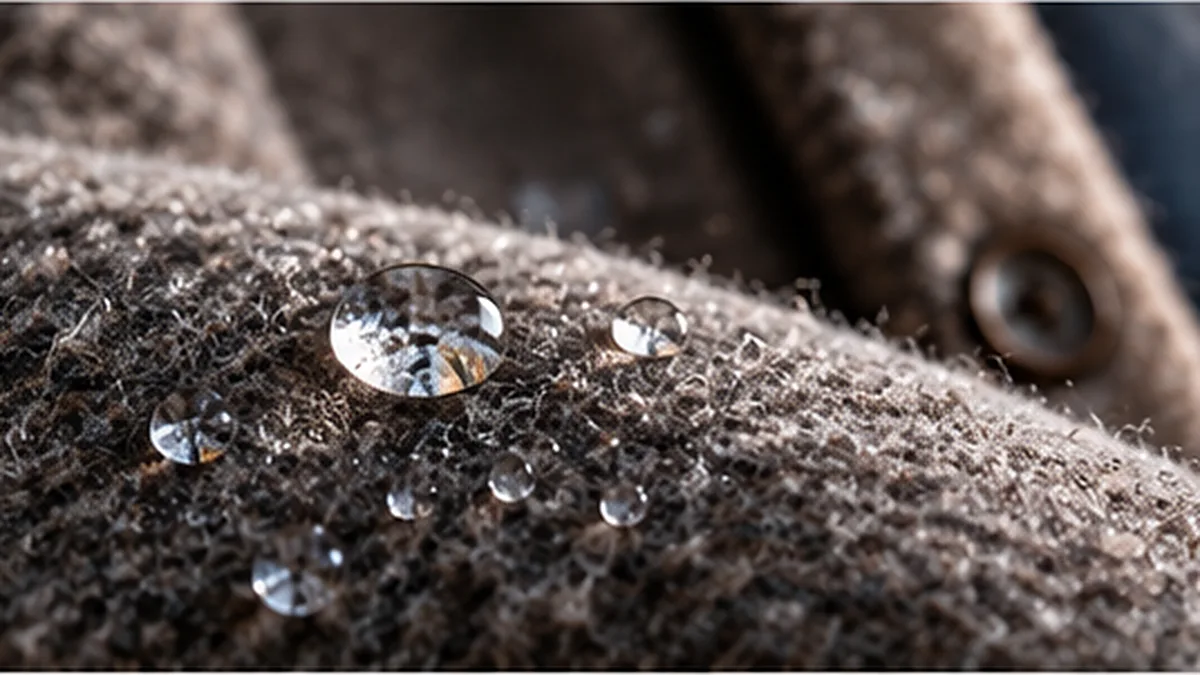
A water repellent for wool builds on a fibre that already sheds some water: wool’s natural structure and lanolin give it a degree of water resistance. A DWR takes that further for coats, suiting and outdoor wool — but wool is delicate, so it must be treated gently to keep it soft, breathable and natural. This guide covers how to make wool repel water without spoiling it.
For the fundamentals, see our durable water repellent overview.
Wool’s natural water resistance, and its limits
Wool fibres have overlapping scales and a waxy surface that make water bead at first, but that resistance is limited and wears off. A durable water repellent gives wool a stronger, more lasting beading effect, useful for tailoring and outerwear that meets real weather.
Treating wool gently
Wool is sensitive to heat, alkali and mechanical action — mistreatment causes felting, shrinkage or a harsh handle. So a wool finish uses mild conditions and a lower cure, and a grade chosen to protect the fibre. Here the process matters as much as the product.
Choosing a grade for wool
A soft, fluorine-free C0 silicone-based grade keeps wool’s handle while adding repellency. Where a wool or wool-blend garment must also shed oily stains, a C6 is an option; see C6 vs C0.
Keeping wool soft, breathable and natural
The whole point of wool is its feel and its breathability, so the finish must not stiffen it, gloss it or trap moisture. A light, well-chosen repellent keeps wool looking and feeling like wool while beading water.
Where wool water repellents are used
- Coats and outerwear.
- Suiting and tailoring.
- Knitwear and outdoor merino.
Get a wool grade
DWR Factory supplies soft, gentle water repellents for wool and wool blends, with OEKO-TEX-compliant options and a TDS per grade. Tell us your fabric and we will recommend one: request a free sample or browse the range.
Frequently asked questions
Is wool naturally water repellent?
Wool has some natural water resistance from its scales and lanolin, but it is limited and wears off; a DWR makes the effect stronger and more durable.
Can you make wool water repellent without spoiling it?
Yes, using mild conditions, a lower cure and a soft grade that protects the fibre’s handle and breathability.
What is the best water repellent for wool coats?
A soft, fluorine-free C0 silicone-based grade that keeps wool’s natural feel while adding beading.
Does treating wool make it stiff or shrink?
Not if done gently. Heat, alkali and agitation cause felting and harshness, so wool finishes use mild processes.
Can wool blends be treated too?
Yes — wool blends are treated similarly, with the grade chosen for the other fibre and the garment’s use.
Explore our water repellents
Need help choosing a water repellent?
Tell us your substrate, process and target. Our technical team will recommend a grade, send the datasheet, and arrange a free sample.