Wash Durable Water Repellent: Crosslinkers, Curing & How Many Washes
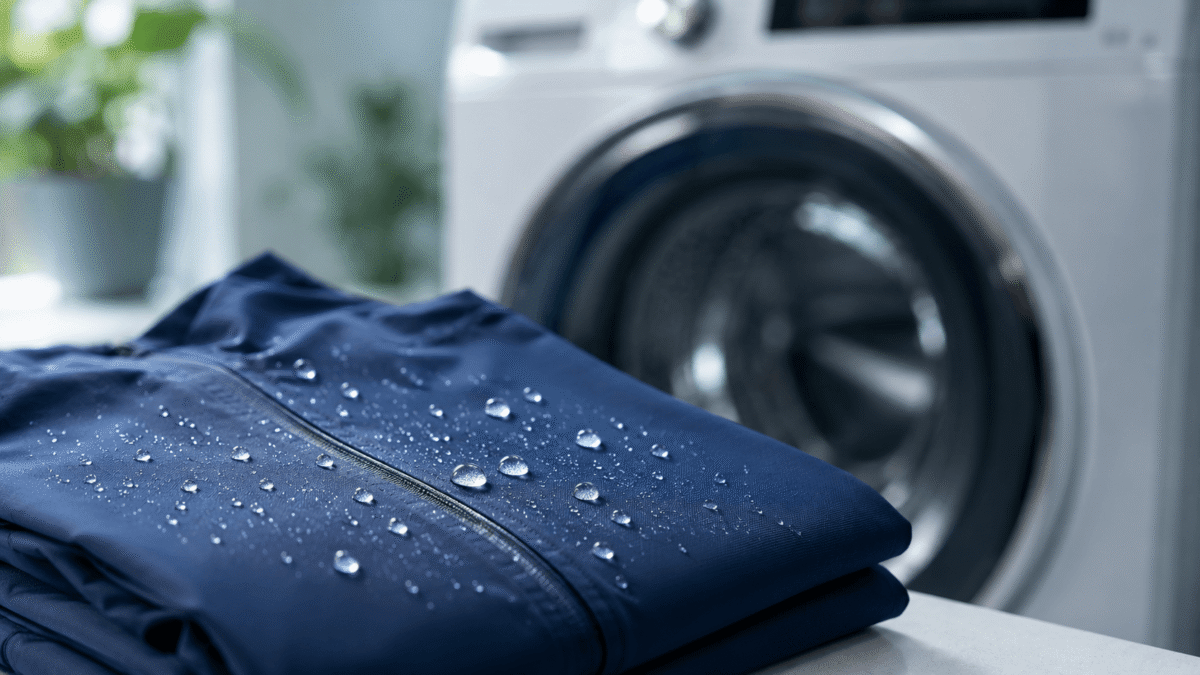
A wash durable water repellent keeps beading water after repeated laundering, instead of rinsing out after a few cycles. Durability comes down to three things: a crosslinker, a proper heat cure, and clean substrate prep. This guide explains what makes a water repellent wash durable, how many washes to expect, and how to specify it.
For the basics, see our durable water repellent overview; for the numbers behind durability, see water repellency ratings.
What “wash durable” actually means
Wash durability is quoted as a retained rating: an initial spray rating plus the rating still achieved after a set number of home launderings — for example “100 initial, 80 after 20 washes”. A finish that starts at 100 but drops to 50 after five washes isn’t durable, however good it looks straight off the line.
The three drivers of wash durability
- Crosslinker: the single biggest factor. It chemically bonds the repellent to the fibre so it survives washing. Skip it and the finish washes out fast.
- Cure temperature & time: a proper cure (typically 150–170 °C) is what activates that bonding. Under-curing is the most common cause of poor durability.
- Substrate prep: clean, well-scoured fabric with no residual surfactant or softener — leftovers block the finish and pull water in.
All three are about application, not just the product. See how to apply durable water repellent for the full method.
How many washes can you expect?
With a crosslinker and a proper cure, a modern C0 water repellent holds a useful water rating for 20+ home washes; C6 fluorocarbon finishes are typically a little more durable again. Two more factors matter: commercial and industrial laundering is harsher than home washing, and a warm tumble-dry actually helps — the heat re-orients the finish and can recover some repellency between washes.
Why finishes fail early
- No crosslinker, or the wrong one for the chemistry.
- Under-curing — too low a temperature, or too short a dwell time.
- Fabric that still holds scouring surfactant or softener.
- Wrong bath pH, which stops the crosslinker working.
C0 vs C6: does chemistry change durability?
Both C0 and C6 can be made into a genuinely wash durable water repellent with the right crosslinker and cure. C6 has a slight edge in ultimate durability and, unlike C0, also repels oil — but for water repellency alone, a well-applied C0 is durable enough for most apparel and technical uses. The full comparison is in C6 vs C0 water repellent.
How to specify and test it
Don’t just ask for “durable”. Specify an initial and a retained target — for example an AATCC 22 spray rating of 90 initial and 80 after 20 washes — plus the laundering method used to test it, so everyone measures the same way (see AATCC test methods).
Get a wash durable water repellent
DWR Factory supplies wash durable C0 and C6 grades with the matching crosslinker, and a TDS that states initial and retained ratings and the recommended cure. Tell us your substrate and wash target and we’ll recommend a grade: request a free sample or browse the range.
Frequently asked questions
How many washes does a durable water repellent last?
With a crosslinker and a proper cure, a modern C0 holds a useful water rating for 20+ home washes; C6 is typically a little more durable again.
What makes a water repellent wash durable?
A crosslinker, a proper heat cure (typically 150–170 °C), and clean, surfactant-free substrate prep.
Does tumble drying restore water repellency?
Often yes — the heat re-orients the finish and can recover some repellency between washes.
Do you need a crosslinker for wash durability?
Yes. Without a crosslinker the finish washes out after only a few cycles.
Is a C0 (fluorine-free) finish wash durable?
Yes. With the right crosslinker and cure, a C0 finish holds up well for water repellency.
How is wash durability tested?
As a retained spray rating after a set number of home launderings — for example AATCC 22 measured again after 20 washes.
Explore our water repellents
Need help choosing a water repellent?
Tell us your substrate, process and target. Our technical team will recommend a grade, send the datasheet, and arrange a free sample.