Spray-On Water Repellents: How Air-Dry “Set-and-Forget” Sprays Work
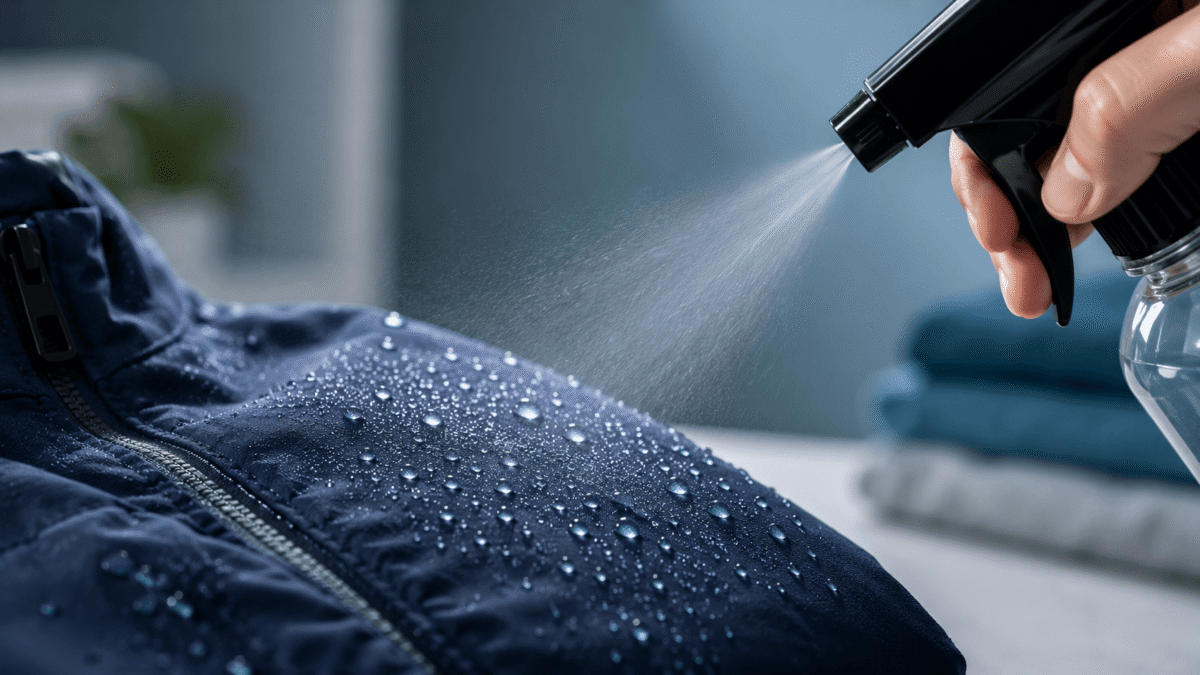
A spray-on water repellent is applied by spraying it directly onto a finished product — a garment, shoe, bag or piece of furniture — and letting it air-dry, with no oven or heat cure needed. It’s how consumer “set-and-forget” protector sprays work, and how brands add water repellency to finished goods without a stenter. This guide explains how spray-on water repellents work, where they fit, and their trade-offs.
For the basics, see our durable water repellent overview; to compare chemistries, see C6 vs C0 water repellents.
How a spray-on water repellent works
You spray an even coat onto the surface; the water or solvent carrier evaporates, leaving the repellent bonded to the fibres, which then bead and shed water. Unlike a mill finish, it needs no heat — the finish sets as it dries in the air. That makes it ideal for finished goods and for end users, who can’t run a product through a curing oven.
Air-dry vs heat-cure: the trade-off
The convenience of air-drying comes at a cost in durability. A sprayed, air-dried finish is less wash-durable than a pad-dry-cure factory finish, because there’s no crosslinker and cure to bond it permanently. That’s fine for its job — it’s designed to be re-applied periodically, like a consumer protector spray — but don’t expect a sprayed finish to survive as many washes as a cured one. See wash-durable water repellency for why cure matters.
Water-based vs solvent-based sprays
| Property | Water-based | Solvent-based |
|---|---|---|
| Dry speed | Slower | Faster |
| Odor | Low | Stronger |
| Initial performance | Strong | Often stronger on tricky surfaces |
| Shipping | Easy (non-hazardous) | Flammable — dangerous-goods handling |
Water-based sprays are safer, lower-odor and far easier to ship; solvent-based dry faster and can wet difficult surfaces better, but are flammable and need dangerous-goods shipping. Many ranges offer both.
C0 vs C6 for sprays
A fluorine-free (C0) spray repels water only — ideal for textiles and upholstery. A C6 spray also repels oil and stains, which is why shoe and leather protectors often use it. Choose based on whether the product needs to shed oil; see C6 vs C0.
Where spray-on water repellents are used
- Consumer aftercare: protector sprays for shoes, jackets, bags and upholstery, sold to end users.
- Footwear & leather: often C6, to repel both water and oil.
- Outdoor gear: refreshing the water repellency on tents, jackets and packs.
- Finished garments: adding repellency to made-up items — see water repellent for apparel.
Trigger, fine-mist or aerosol?
Non-aerosol pumps — a trigger sprayer or a fine-mist sprayer — are the practical choice for most brands: no propellant, easier and cheaper to ship internationally, and no pressurised-canister regulations. Aerosols give the finest, most even coat but add cost and shipping complexity.
Buy a finished spray, or the concentrate?
There are two ways into spray-on products: buy a finished, filled and labelled spray under your own brand, or buy the concentrate and formulate and fill it yourself. Brands usually take the finished-product route; manufacturers with their own filling take the concentrate. We cover the branded route in our private label water repellent spray guide.
Get a spray-on water repellent
DWR Factory supplies spray-on water repellents in water-based and solvent-based, C0 and C6, as ready-to-use finished sprays or as concentrate to formulate — all OEKO-TEX-compliant with a TDS per grade. Tell us your product and substrate and we’ll recommend one: request a free sample or browse the range.
Frequently asked questions
What is a spray-on water repellent?
One you spray directly onto a finished product and let air-dry, with no heat cure — the way consumer protector sprays work.
Do spray-on water repellents need heat?
No. They air-dry; the finish sets as the carrier evaporates, so no oven or curing step is needed.
Are spray-on water repellents as durable as factory finishes?
No. Without a crosslinker and cure they’re less wash-durable, and are designed to be re-applied periodically.
Is a water-based or solvent-based spray better?
Water-based is safer, low-odor and easy to ship; solvent-based dries faster and wets tricky surfaces better but is flammable. Choose by priority.
Can a spray-on water repellent repel oil?
A C6 spray repels water and oil; a fluorine-free C0 spray repels water only.
Can you buy the concentrate to make your own spray?
Yes. You can buy finished sprays, or the concentrate to formulate and fill yourself.
Explore our water repellents
Need help choosing a water repellent?
Tell us your substrate, process and target. Our technical team will recommend a grade, send the datasheet, and arrange a free sample.