Water Repellent for Technical Textiles & Filtration Media
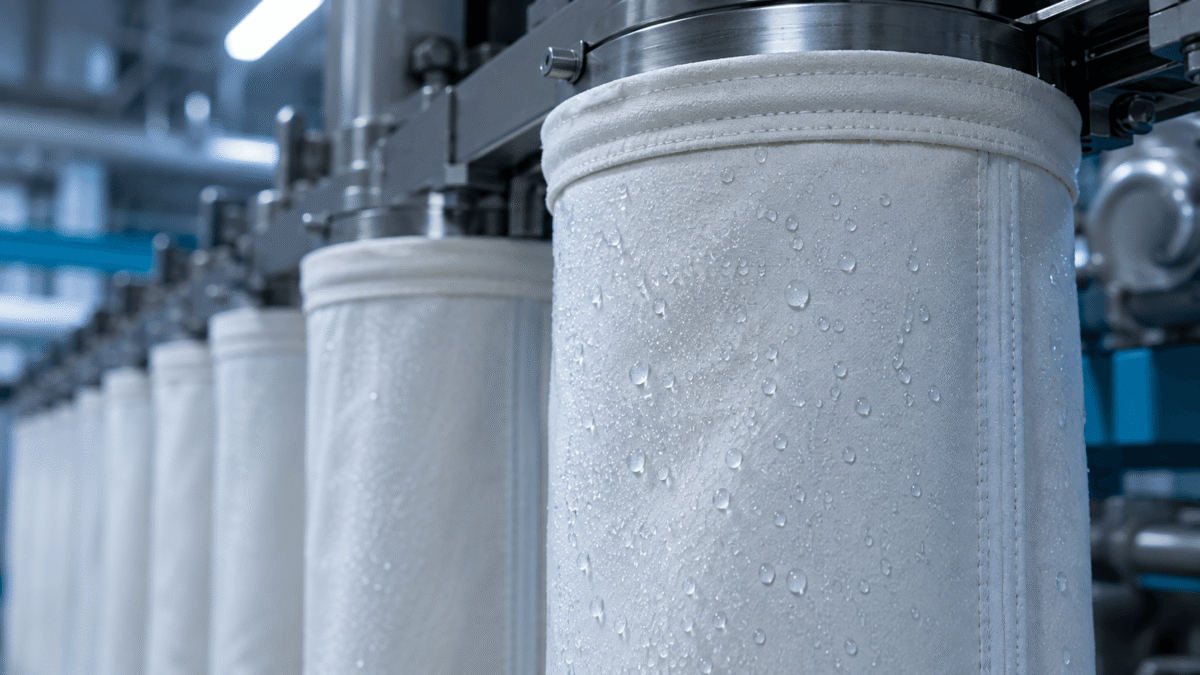
A water repellent for technical textiles has a different job from an apparel finish: it protects industrial fabrics — filtration media, nonwovens, geotextiles, protective and outdoor materials — from water and moisture, often as a recurring production input rather than a one-off treatment. This guide covers what these applications need, why PFAS-free (C0) is increasingly specified, and where a water repellent for technical textiles fits.
For the fundamentals, see our durable water repellent overview; to compare the chemistries, see C6 vs C0 water repellents.
What technical textiles need from a water repellent
- Real-world durability: the finish has to hold up under continuous industrial service, not just a few washes.
- Consistency: as a production input, every batch must perform the same.
- PFAS-free future-proofing: many buyers are switching production inputs to fluorine-free to stay ahead of PFAS restrictions.
- Substrate compatibility: technical fabrics run from aramid to PTFE, and the finish has to suit them.
Filtration media: the biggest use
In dust and baghouse filtration, a hydrophobic finish stops moisture from blinding the filter and helps dust release from the surface, keeping the filter efficient and extending its life. The repellent is usually applied by dip or pad to substrates such as polyester, polypropylene, aramid (meta-aramid / Nomex), PPS and PTFE. For many filter makers this is a recurring, qualified supply position, not a trial — so consistency and documentation matter as much as performance.
Water repellency vs oil repellency for filtration
Some filtration finishes historically repelled both water and oil, which meant fluorochemistry. But with PFAS under pressure, many filter makers are moving the water-repellent input to a fluorine-free PFAS-free (C0) grade, keeping oil repellency only where a process genuinely needs it. If you only need to shed water and moisture, C0 does the job; see C6 vs C0.
Other technical uses
- Geotextiles & construction fabrics: controlling water movement and protecting materials.
- Protective & workwear fabrics: shedding water in the field (oil repellency, where needed, calls for C6).
- Awnings, covers & outdoor materials: long-life water repellency on heavy fabrics.
- Medical & hygiene nonwovens: repellency and barrier on disposable materials.
Supply, consistency and documentation
Because a technical-textile finish is usually a production input, choose a grade with a clear TDS, batch-to-batch consistency and the certificates your customers require — and confirm the supplier can support the volume and lead time you’ll need on an ongoing basis. Get the application right (dilution, cure, prep) and it runs reliably; see how to apply durable water repellent.
Get a technical-textile grade
DWR Factory supplies water repellents for technical textiles and filtration media — C0 and C6, water- and solvent-based, for aramid, PPS, PTFE, polyester and PP — with OEKO-TEX and ZDHC-compliant options and a TDS/SDS per grade. Tell us your substrate and process and we’ll recommend one: request a free sample or browse the range.
Frequently asked questions
What is a water repellent for technical textiles?
A finish that gives industrial fabrics — filter media, nonwovens, geotextiles and protective materials — water and moisture repellency, usually as a recurring production input.
Can you make filter media water repellent?
Yes. A hydrophobic finish is applied by dip or pad to substrates such as polyester, PP, aramid, PPS and PTFE.
Why treat filtration media with a water repellent?
It stops moisture from blinding the filter and helps dust release from the surface, keeping the filter efficient and extending its life.
Is there a PFAS-free option for technical textiles?
Yes. A fluorine-free C0 grade gives water repellency without PFAS, which is why many filter and technical-fabric makers are switching to it.
What substrates can be treated?
Common ones include polyester, polypropylene, meta-aramid (Nomex), PPS and PTFE, among other technical fibres.
Can a water repellent for technical textiles also repel oil?
A C6 grade repels water and oil; a fluorine-free C0 grade repels water only. Choose based on whether the process needs oil repellency.
Explore our water repellents
Need help choosing a water repellent?
Tell us your substrate, process and target. Our technical team will recommend a grade, send the datasheet, and arrange a free sample.